ERP for Consumer Packaged Goods
Consumer Packaged Goods (CPG) companies live and die by speed. A shampoo brand that can’t restock shelves in 48 hours loses the sale to a competitor sitting right next to it. A snack manufacturer that can’t predict a demand spike around a festival season ends up with either empty warehouses or expired inventory. In an industry built on razor-thin margins, high SKU counts, and unpredictable consumer behavior, the supply chain isn’t just a back-office function — it’s the business.
This is exactly why so many CPG companies are turning to modern ERP for Consumer Packaged Goods platforms, and specifically to SAP S/4HANA, to rebuild how they plan, produce, and deliver. Legacy systems that once worked fine in a world of quarterly forecasts and slow-moving retail cycles simply can’t keep up with omnichannel demand, e-commerce spikes, and global supply disruptions. SAP S/4HANA changes that equation by giving CPG businesses a real-time, connected, and predictive backbone for their entire supply chain.
In this article, we’ll break down exactly how SAP S/4HANA helps CPG companies become more responsive, what a successful SAP S/4HANA Implementation actually involves, and why so many mid-size and enterprise CPG brands are moving to SAP S/4HANA Cloud Services instead of maintaining an on-premise setup.
Why Traditional Supply Chains Are Failing CPG Companies
Before we talk about the solution, it’s worth understanding the problem. Most CPG companies today are still running on a patchwork of systems — an old ERP for finance, a separate warehouse management tool, a third-party demand planning spreadsheet, and disconnected supplier portals. None of these systems talk to each other in real time.
The result? By the time a plant manager knows that a key ingredient shipment is delayed, production has already been scheduled around it. By the time a regional sales team notices a demand surge, the central warehouse has already shipped based on last month’s forecast. Data lives in silos, decisions are made on outdated information, and “responsiveness" becomes a buzzword rather than a reality.
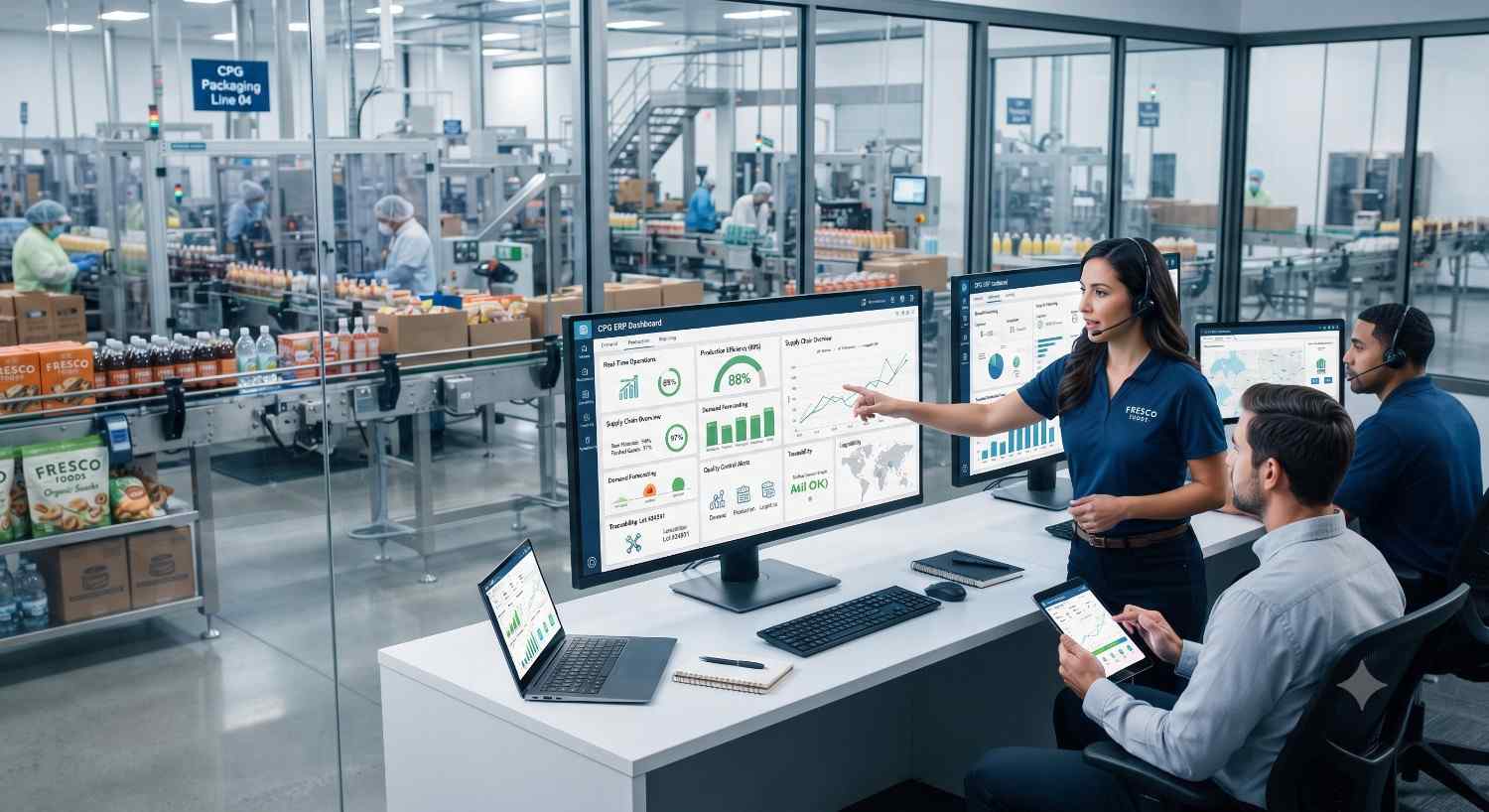
This is the core problem that a modern ERP for Consumer Packaged Goods is designed to solve — not by adding another tool to the stack, but by unifying finance, procurement, manufacturing, inventory, and logistics on a single digital core.
What Makes SAP S/4HANA Different for CPG Companies
SAP S/4HANA isn’t just an upgrade from older SAP ECC systems — it’s a fundamentally different architecture built on the in-memory HANA database. That single technical change has massive implications for a CPG supply chain.
1. Real-Time Data Instead of Batch Reporting
Older ERP systems process data in batches, often overnight. That means a CPG demand planner making decisions at 9 AM is working with yesterday’s numbers. SAP S/4HANA processes transactions and analytics on the same in-memory platform, so inventory levels, order status, and production data are visible the moment they change. For a supply chain that has to react to a viral social media trend or a sudden weather-driven demand shift, that difference between yesterday’s data and this second’s data is the difference between capturing a sale and losing it to a competitor.
2. Unified Data Model Across the Supply Chain
In a typical CPG operation, procurement, manufacturing, warehousing, and sales often run on separate modules or even separate systems. SAP S/4HANA for CPG supply chain brings these functions onto one unified data model. When a raw material shortage hits, the system doesn’t just flag it in procurement — it automatically shows the downstream impact on production schedules, order fulfillment, and customer delivery dates. This end-to-end visibility is what actually enables a responsive supply chain, rather than a reactive one.
3. Embedded Analytics and AI-Driven Forecasting
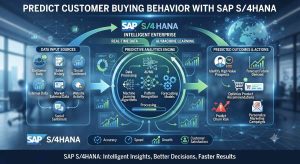
SAP S/4HANA comes with embedded analytics and machine-learning-driven demand forecasting built directly into the core system. For CPG companies, this means demand sensing that accounts for promotions, seasonality, weather patterns, and even social sentiment — not just historical sales averages. Better forecasts mean less overproduction, less waste (a huge cost center for perishable and semi-perishable CPG goods), and fewer stockouts during peak demand windows.
4. Integrated Supplier and Logistics Networks
Through SAP Business Network and integrated logistics modules, SAP S/4HANA connects CPG manufacturers directly with suppliers, co-packers, and logistics providers. Instead of emailing purchase orders back and forth, companies get real-time visibility into supplier capacity, shipment status, and potential delays — allowing supply chain teams to reroute, expedite, or adjust production before a small delay becomes a major stockout.
The Business Case: How This Translates into Supply Chain Responsiveness
It helps to translate these technical capabilities into outcomes CPG leaders actually care about:
-
Faster order-to-delivery cycles — because inventory, production, and logistics data are synchronized in real time rather than reconciled after the fact.
-
Lower inventory carrying costs — accurate, AI-assisted demand forecasting means companies stock what they need, not what they guess they’ll need.
-
Reduced stockouts and lost sales — real-time visibility into inventory across warehouses and distribution centers means shortages are caught and corrected before they hit the shelf.
-
Better trade promotion management — CPG companies can model the supply chain impact of a promotion before launching it, rather than scrambling to meet demand after the fact.
-
Improved compliance and traceability — critical for food, beverage, and personal care companies that need batch-level traceability for recalls or regulatory audits.
-
Scalable operations across regions — a single global template supports multiple currencies, languages, and local compliance requirements, which matters enormously for CPG companies expanding into new markets.
SAP S/4HANA Cloud Services: Why CPG Companies Are Moving Away from On-Premise
One of the biggest shifts in the last few years has been the move from on-premise SAP S/4HANA deployments to SAP S/4HANA Cloud Services. For CPG companies specifically, this shift makes a lot of sense.
CPG supply chains are dynamic — new product launches, seasonal SKUs, changing co-manufacturing partners, and shifting retail channel mixes happen constantly. A cloud-based deployment gives supply chain and IT teams the flexibility to scale computing resources, add new plants or distribution centers, and roll out updates without the long IT cycles that on-premise systems require.
SAP S/4HANA Cloud Services also come with:
-
Continuous innovation — new AI and analytics features are rolled out automatically rather than requiring a multi-month upgrade project.
-
Lower total cost of ownership — reduced infrastructure and maintenance overhead compared to running your own data centers.
-
Faster time to value — pre-configured, industry-specific best practices for CPG mean companies don’t have to build every process from scratch.
-
Built-in security and compliance updates — critical for CPG companies handling sensitive supplier contracts, formulas, and consumer data.
For growing CPG brands that don’t want to carry the burden of managing on-premise infrastructure, the cloud model has become the default choice rather than the exception.
What a Successful SAP S/4HANA Implementation Looks Like in CPG
Technology alone doesn’t make a supply chain responsive — the implementation approach matters just as much. A poorly planned SAP S/4HANA Implementation can leave a CPG company with the same silos it started with, just wrapped in a new interface.
Here’s what tends to separate successful CPG implementations from stalled ones:
-
Start with supply chain processes, not just IT migration. The goal isn’t just to move data into a new system — it’s to redesign demand planning, production scheduling, and logistics workflows around real-time visibility.
-
Use CPG-specific best practices, not generic templates. SAP offers industry-specific accelerators for CPG that account for things like batch management, recipe/formula handling, and trade promotion processes — using these speeds up implementation significantly.
-
Prioritize integration with existing systems. Most CPG companies aren’t starting from zero — they have warehouse management systems, e-commerce platforms, and supplier portals already in place. A good implementation partner maps out these integrations early rather than treating them as an afterthought.
-
Invest in change management. Supply chain teams that have worked around legacy systems for years need training and support to trust and use real-time data effectively. Technology adoption often fails not because of the software, but because of the people using it.
-
Plan for phased rollouts. Rather than a single “big bang" go-live across every plant and region, many successful CPG implementations roll out by business unit or geography, allowing lessons learned in one phase to improve the next.
Real-World Impact: What Responsive Supply Chains Look Like in Practice
Consider a mid-size beverage company managing dozens of SKUs across multiple bottling plants and regional distributors. Before SAP S/4HANA for CPG supply chain, a raw material delay at one plant wasn’t visible to the sales and distribution teams until finished goods failed to ship — often days later. After implementation, the same delay triggers an automatic alert that flows through to production planning, allowing schedulers to shift output to another plant or adjust delivery commitments proactively, before the customer even notices a problem.
Or take a personal care manufacturer running seasonal promotions around major shopping events. With embedded demand forecasting, the company can model expected demand uplift, check real-time raw material and packaging availability, and adjust procurement and production plans weeks in advance — rather than finding out too late that they don’t have enough stock to meet the promotional demand they created.
These aren’t hypothetical benefits — they’re the direct result of moving from disconnected, batch-processed systems to the unified, real-time architecture that SAP S/4HANA provides.
Frequently Asked Questions
What is SAP S/4HANA and why is it relevant to CPG companies? SAP S/4HANA is an intelligent, in-memory ERP platform that unifies finance, supply chain, manufacturing, and procurement data in real time. For CPG companies, it replaces disconnected legacy systems with a single source of truth, enabling faster decision-making across the entire supply chain.
How is SAP S/4HANA different from a generic ERP for Consumer Packaged Goods? While many ERP systems offer basic supply chain modules, SAP S/4HANA is built on an in-memory database that processes transactions and analytics simultaneously. Combined with CPG-specific capabilities like batch management and trade promotion planning, it’s purpose-built for the complexity of consumer goods operations.
Should a CPG company choose SAP S/4HANA Cloud Services or an on-premise deployment? Most growing and mid-size CPG companies benefit more from SAP S/4HANA Cloud Services because of lower infrastructure overhead, faster scalability, and continuous access to new AI-driven features without lengthy upgrade cycles.
How long does a typical SAP S/4HANA Implementation take for a CPG company? Timelines vary based on company size and complexity, but a phased implementation — starting with core finance and supply chain modules before expanding to manufacturing and logistics — typically allows CPG companies to see initial results within a few months rather than waiting for a single, multi-year rollout.
Can SAP S/4HANA help with demand forecasting during promotions and seasonal spikes? Yes. SAP S/4HANA includes embedded, AI-assisted demand planning tools that factor in promotions, seasonality, and historical sales patterns, helping CPG companies avoid both stockouts and overproduction during high-demand periods.
Final Thoughts
The CPG industry doesn’t have the luxury of slow, reactive supply chains anymore. Consumer expectations move fast, retail channels are more fragmented than ever, and disruptions — whether it’s a shipping delay or a sudden demand spike — can hit at any time. Companies that continue to run on disconnected legacy systems will keep firefighting the same problems again and again.
SAP S/4HANA for CPG supply chain offers a genuinely different path: real-time visibility, AI-driven forecasting, and a unified data model that connects every part of the supply chain, from raw material sourcing to the retail shelf. Combined with the flexibility of SAP S/4HANA Cloud Services and a well-planned SAP S/4HANA Implementation, CPG companies gain not just a faster supply chain, but a genuinely responsive one — able to sense change and react before it becomes a problem.
For any CPG company evaluating its next ERP move, the question isn’t really whether to modernize — it’s how quickly they can get there before competitors do it first.
Contact form