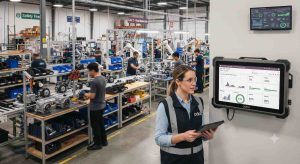
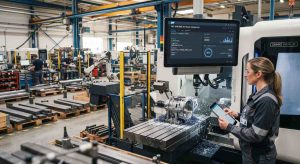
SAP Business One for Discrete Manufacturing
Ask any discrete manufacturer what keeps them up at night, and you’ll hear the same handful of answers: a production run gets delayed because a part wasn’t where the system said it was, an order ships late because nobody caught a component shortage in time, or the year-end stock count turns up a discrepancy nobody can explain. These aren’t rare, one-off problems — they’re symptoms of a deeper issue: disconnected systems that can’t give manufacturers a single, accurate view of what’s happening on their shop floor.
For small and mid-sized discrete manufacturers — companies building distinct, countable units like machinery, electronics, metal components, or industrial equipment — these inefficiencies quietly erode margins every single day. This is where SAP Business One for Discrete Manufacturing has proven itself as one of the most effective solutions on the market, giving growing manufacturers the kind of visibility and control that used to be reserved for large enterprises running complex, expensive systems.
In this article, we’ll walk through exactly how SAP Business One tackles production delays and inventory errors, what a typical SAP Business One Implementation looks like, and why ongoing SAP Business One Support matters just as much as the initial rollout.
The Real Cost of Production Delays and Inventory Errors
Before diving into the solution, it’s worth understanding why these problems are so damaging for discrete manufacturers specifically.
Unlike process manufacturers who work with continuous flows (like chemicals or food), discrete manufacturers assemble distinct products from individual components — often with complex bills of materials (BOMs), multiple sub-assemblies, and dozens or hundreds of parts per finished unit. This complexity creates a lot of room for things to go wrong:
-
A single missing component can stall an entire assembly line
-
Inaccurate inventory counts lead to either costly overstocking or embarrassing stockouts
-
Manual data entry between disconnected systems (spreadsheets, standalone accounting software, paper-based shop floor tracking) introduces errors at every handoff
-
Poor visibility into work-in-progress (WIP) makes it nearly impossible to give customers accurate delivery dates
-
Lack of real-time data means problems are often discovered days after they actually occurred
Each of these issues compounds. A late shipment doesn’t just annoy one customer — it can damage a long-term relationship. An inventory error doesn’t just cost the value of the missing part — it can shut down a production line that depends on it. This is exactly the gap that ERP for Discrete Manufacturing is designed to close, and SAP Business One does it in a way that’s accessible for small and mid-sized businesses.
What Is SAP Business One, and Why Does It Fit Discrete Manufacturers?
SAP Business One is an integrated ERP for Discrete Manufacturing solution built specifically for small and mid-sized businesses. Unlike larger SAP products designed for massive global enterprises, Business One is lightweight enough to implement quickly while still offering the depth of functionality manufacturers actually need — production planning, inventory management, procurement, financials, and reporting, all in a single connected system.
For discrete manufacturers, this matters because it eliminates the need to stitch together separate tools for accounting, inventory, and production tracking. Everything lives in one database, which means the number entered on the shop floor is the same number your finance team sees, and the same number your sales team uses to quote a delivery date.
How SAP Business One Reduces Production Delays
Real-Time Production Visibility
One of the most immediate benefits of SAP Business One for Discrete Manufacturing is real-time visibility into every stage of production. Production managers can see exactly which orders are in progress, which are waiting on materials, and which are ready to move to the next stage — without walking the floor or calling around for updates.
This visibility alone eliminates a huge source of delay: the time lost simply figuring out where a bottleneck is happening. When problems are visible immediately, they can be resolved in hours instead of days.
Accurate Bill of Materials (BOM) Management
Discrete manufacturing depends heavily on accurate BOMs. SAP Business One allows manufacturers to build multi-level BOMs, track engineering changes, and ensure that production orders always reference the correct, most current version of a product’s components. This reduces the common problem of production being held up because the wrong revision of a part was pulled or specified.
Material Requirements Planning (MRP)
SAP Business One includes a built-in MRP engine that calculates exactly what materials are needed, when they’re needed, and in what quantity — based on actual sales orders, forecasts, and current inventory levels. This proactive planning prevents the scenario where a production run is scheduled, only to discover midway through that a critical component is missing.
Capacity Planning and Scheduling
By giving planners visibility into machine and labor capacity, SAP Business One helps avoid the double-booking of resources that so often causes cascading delays. Production schedules can be adjusted in real time as priorities shift, rather than manually re-worked across spreadsheets.
Faster Issue Resolution Through Alerts
Automated alerts notify relevant staff the moment something goes off track — a delayed shipment from a supplier, a production order falling behind schedule, or stock dropping below a reorder point. This means problems get addressed while there’s still time to prevent a delay, rather than being discovered after the damage is done.
How SAP Business One Reduces Inventory Errors
Real-Time Inventory Tracking
Perhaps the single biggest win for discrete manufacturers using SAP Business One is real-time, accurate inventory tracking. Every transaction — receiving raw materials, issuing components to a production order, moving finished goods to a warehouse — updates inventory instantly. There’s no lag, no end-of-day reconciliation, and no guessing.
Serial and Batch Number Tracking
For manufacturers dealing with regulated products or components requiring traceability, SAP Business One supports serial and batch tracking down to the individual unit. This is critical not just for compliance, but for quickly isolating affected inventory in the event of a quality issue or recall.
Multi-Warehouse and Bin Location Management
As manufacturers grow, inventory often gets spread across multiple warehouses or storage bins. SAP Business One tracks exact locations, reducing the time wasted searching for parts and minimizing the errors that come from manual location tracking.
Cycle Counting Instead of Disruptive Annual Counts
Rather than shutting down operations for a massive annual physical inventory count, SAP Business One supports cycle counting — regularly counting smaller subsets of inventory on a rotating basis. This keeps inventory accuracy consistently high without the operational disruption of a full shutdown.
Elimination of Manual Data Entry Errors
Because SAP Business One integrates procurement, production, and warehouse management into a single system, data doesn’t need to be manually re-entered across disconnected tools. This alone eliminates one of the most common sources of inventory discrepancies: simple human transcription error.
What a SAP Business One Implementation Looks Like
A well-planned SAP Business One Implementation typically follows a structured path:
-
Business Process Assessment — Understanding current production workflows, inventory practices, and pain points specific to the manufacturer.
-
System Configuration — Setting up BOMs, routings, warehouses, item master data, and production workflows to match the company’s actual operations.
-
Data Migration — Transferring existing inventory records, customer/vendor data, and historical transactions into the new system.
-
Integration — Connecting SAP Business One with other tools the business relies on, such as CRM systems, e-commerce platforms, or shop floor data collection devices.
-
User Training — Ensuring production staff, planners, and finance teams are comfortable navigating the system before go-live.
-
Go-Live and Stabilization — Launching the system with close monitoring to catch and resolve any issues quickly.
Because SAP Business One is built for small and mid-sized businesses, implementation timelines are typically much shorter than larger ERP rollouts — often completed within 3 to 6 months depending on the complexity of the manufacturer’s operations and the number of integrations required.
Why SAP Business One Support Matters Long After Go-Live
Many manufacturers make the mistake of treating SAP Business One implementation as a one-time project rather than an ongoing relationship. This is a costly assumption. Production processes evolve, new products get introduced, and businesses grow — all of which require the system to adapt alongside them.
Reliable SAP Business One Support provides:
-
Troubleshooting and issue resolution when unexpected problems arise in daily operations
-
System optimization as production volumes grow or new product lines are introduced
-
Regular updates and patches to keep the system secure and running efficiently
-
User training refreshers for new employees or when processes change
-
Custom report and dashboard adjustments as management’s reporting needs evolve
Manufacturers who invest in ongoing support consistently get more value out of their ERP for Discrete Manufacturing system over time, rather than watching it become outdated or underutilized a few years after go-live.
Real-World Impact: What Discrete Manufacturers Typically Experience
While outcomes vary based on company size and how well the implementation is executed, discrete manufacturers using SAP Business One commonly report:
-
Fewer production stoppages caused by missing or miscounted components
-
Improved on-time delivery rates due to more accurate production scheduling
-
Reduced excess inventory carrying costs from more accurate demand-based planning
-
Faster month-end closing thanks to real-time, integrated financial data
-
Significant reduction in manual data entry errors across departments
These improvements compound over time — a manufacturer that fixes chronic inventory discrepancies doesn’t just save on carrying costs, they also free up staff time previously spent investigating and correcting errors.
Frequently Asked Questions
What is SAP Business One used for in discrete manufacturing?
SAP Business One is used to manage production planning, bill of materials, inventory tracking, procurement, and financials for discrete manufacturers, giving them a single, real-time view of operations instead of relying on disconnected spreadsheets and tools.
How long does a SAP Business One Implementation take?
Most small and mid-sized discrete manufacturers complete implementation within 3 to 6 months, depending on the complexity of their production processes and the number of system integrations needed.
Does SAP Business One reduce inventory errors?
Yes. Through real-time inventory updates, serial and batch tracking, multi-warehouse management, and cycle counting, SAP Business One significantly reduces the discrepancies common in manually managed inventory systems.
Why is ongoing SAP Business One Support important after go-live?
ERP for Discrete Manufacturing Ongoing support ensures the system evolves alongside the business — resolving issues quickly, optimizing performance as the company grows, and keeping the system updated and secure.
Is SAP Business One suitable for small manufacturers, or only larger companies?
SAP Business One is specifically designed for small and mid-sized businesses, making it accessible for growing discrete manufacturers who need enterprise-level functionality without enterprise-level complexity or cost.
Final Thoughts
Production delays and inventory errors aren’t just operational annoyances for discrete manufacturers — they’re profit leaks that compound quietly over time. The manufacturers who fix these problems aren’t necessarily the ones working harder; they’re the ones working with better visibility into what’s actually happening across in ERP for Discrete Manufacturing their production floor and inventory in real time.
SAP Business One for Discrete Manufacturing gives growing manufacturers exactly that: a single, connected system that eliminates the guesswork, reduces manual errors, and keeps production on schedule. Paired with a well-planned SAP Business One Implementation and consistent SAP Business One Support after go-live, it becomes less of a software upgrade and more of a long-term operational advantage.
For discrete manufacturers still relying on disconnected spreadsheets and manual processes, the cost of waiting to modernize often outweighs the effort of making the switch.