ERP For Retail Business: How Growing Indian Retailers Can Scale Without Chaos
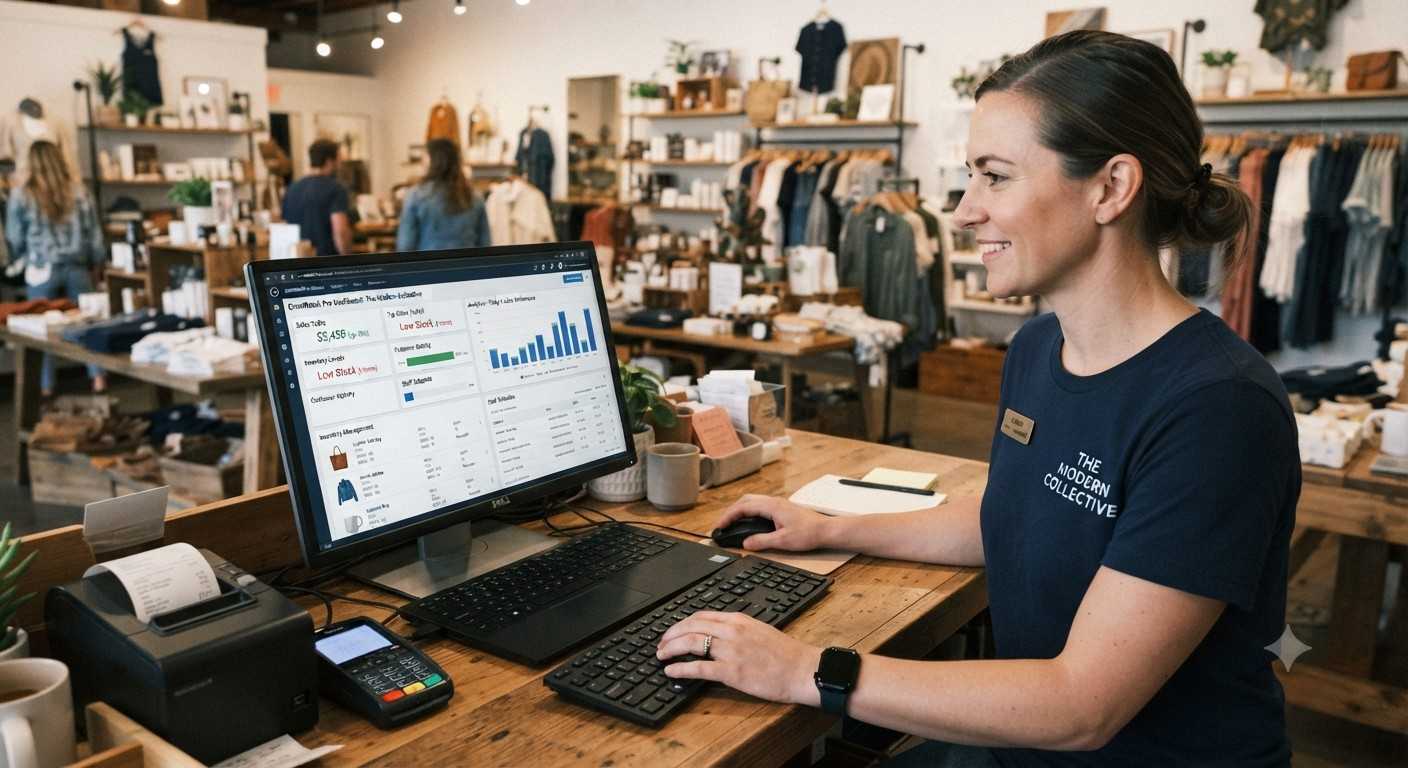
Retail ERP Software Built for Growing Indian Retail Businesses
How ERP for retail business replaces spreadsheets and disconnected tools with one system for stock, billing, GST and multi-store growth.
Quick answer: What is ERP for retail business?
ERP for retail business is a single software system that connects inventory, billing, purchasing, accounting, GST compliance and customer data across every store and online channel. For growing Indian retailers, it replaces spreadsheets and disconnected tools with one source of truth, so owners decide faster and with fewer errors.
“Sales doubled in two years. So did the confusion. Every store told me a different stock number.”
A multi-store retailer in Jaipur
Ten years ago, a shop owner in Pune or Jaipur could run a successful store with a billing machine, a notebook and a good memory. Today the same owner deals with GST returns, online marketplaces, UPI payments, festive demand spikes and customers who expect the same price and stock on WhatsApp, in-store and on the website.
This is where many Indian retail businesses hit a wall. Sales grow, but so does the confusion. Reports arrive late, and nobody is sure which store really makes money. That is the exact problem ERP for retail business solves. In this guide we explain what retail ERP software is, why it matters in India, what features to look for, what it costs and how to choose well. You can also see our wider ERP for retail industry page for solution details.
What Is ERP for a Retail Business?
ERP stands for Enterprise Resource Planning. In simple terms, it is one platform that runs the core of your business instead of five or six separate tools. Retail ERP software typically brings together:
POS and billing
Fast checkout with GST-ready invoices and multiple payment modes.
Inventory and warehouse
Live stock across every store, warehouse and online channel.
Purchase and vendors
Purchase orders, goods receipts and supplier payments in one flow.
Accounting and GST
Automatic tax calculation, e-invoicing and return-ready reports.
CRM and loyalty
Purchase history, points, coupons and targeted campaigns.
Reports and analytics
Daily sales, margin and store performance without waiting for month-end.
The key word is integrated. When a customer buys a shirt at your Nagpur outlet, the system updates stock, posts the accounting entry, calculates GST, adds loyalty points and flags a reorder if stock runs low, all in real time and without anyone re-typing data.
Why Indian Retailers Need ERP Now
Five forces make the case stronger every year:
1. The market is growing and getting complex
Retail is expanding across metros, Tier 2 and Tier 3 cities. A retailer who once ran one shop now manages three stores, a warehouse and an online storefront. Every added location multiplies the chance of error when systems are not connected.
2. GST and e-invoicing demand accuracy
Multiple GST slabs, HSN codes, input tax credit and e-invoicing rules leave little room for manual work. Mistakes lead to mismatched returns and penalties. Good ERP software for retail in India is built around these rules, not retrofitted to them.
3. Omnichannel is no longer optional
Customers discover products on Instagram, compare on marketplaces and buy in-store. If your website shows an item in stock while the shelf is empty, you lose trust. Retail ERP keeps stock visible across channels.
4. Festive seasons punish poor planning
Diwali, Eid, Christmas, wedding season and end-of-season sales create sharp demand spikes. Without data you either overstock and block cash, or understock and lose sales. ERP analytics let you plan from real history.
5. Margins are thin
Shrinkage, dead stock, billing errors and unrecorded discounts quietly eat profit. ERP gives you the visibility to find and stop these leaks.
Signs Your Retail Business Has Outgrown Spreadsheets
You may be ready for ERP if you recognise three or more of these:
- 1Closing the month’s books takes more than a week.
- 2Different stores report different stock for the same item.
- 3You discover stock-outs only after customers complain.
- 4GST reconciliation is stressful every single month.
- 5You cannot say which products or stores actually make money.
- 6Staff spend hours on manual data entry.
- 7You plan to open new outlets or launch online sales.
If this list sounds familiar, ERP for retail business is your next growth investment, not just an IT expense.
Key Features to Look for in Retail ERP Software
Not every system suits every retailer. Check these areas closely during demos.
Retail inventory management software capabilities
Inventory is the heart of retail, and it is often where the fastest return appears, because trapped stock is trapped cash. Strong retail inventory management software should offer:
- Real-time stock across stores and warehouses
- Barcode and SKU management, including size and colour variants
- Batch, expiry and serial number tracking
- Automated reorder points and purchase suggestions
- Inter-store transfers, cycle counts and shrinkage reports
- Dead and slow-moving stock alerts
Unified POS and billing
Barcode scanning, cash, card, UPI and wallet payments, returns, exchanges, discounts and an offline mode for weak internet.
GST-ready accounting
Automatic GST calculation, GSTR-ready reports, e-invoicing, e-way bills, TDS and bank reconciliation.
Purchase and vendor management
Purchase orders, goods receipt notes, vendor rate comparison, payment tracking and landed-cost calculation.
CRM and loyalty
Purchase history, loyalty points, coupons and WhatsApp or SMS campaigns that bring repeat customers back.
Multi-store and franchise control
Central pricing, role-based access, store-wise profit reports and consolidated accounting.
E-commerce and marketplace sync
Stock and orders sync with your website and marketplaces so you never oversell.
Not sure which retail ERP fits your stores?
Get a free, no-pressure assessment from a certified SAP and Odoo partner.
Benefits of ERP For Retail Business Growth
Accurate, real-time inventory
You always know what you have and where it sits.
Faster, cleaner compliance
GST, invoicing and audit trails are built into daily work.
Better cash flow
Smarter purchasing means less money tied up in slow stock.
Better decisions
Data on SKUs, stores, seasons and customers replaces gut feel.
Lower operating costs
Automation cuts manual work and billing errors.
Scalability
Opening a new store becomes a repeatable process, not a reinvention.
Larger retail groups also look at SAP’s cloud direction for the industry. Our guide on SAP Intelligent ERP public cloud for retail in 2027 explains where enterprise retail ERP is heading, and SAP’s own retail industry solutions page shows the wider portfolio.
Cloud vs On-Premise Retail ERP
| Factor | Cloud ERP | On-Premise ERP |
|---|---|---|
| Upfront cost | Lower (subscription) | Higher (licences, servers) |
| Access | Anywhere with internet | Mostly within office or network |
| Updates | Automatic | Manual, scheduled |
| Multi-store sync | Easier | More complex |
| Customization | Moderate to high | High |
| Maintenance | Vendor-managed | Your IT team |
For most growing Indian retailers, cloud-based retail ERP software is the practical choice thanks to lower startup cost and simple multi-location access. Large chains with strict data or customization needs may still prefer on-premise or hybrid models.
How Much Does Retail ERP Cost in India?
Pricing varies widely with users, stores, modules and customization. As a general guide, small retailers with one to three stores usually start with entry-level cloud plans billed per user or per store. Mid-size retailers pay a higher subscription plus implementation, training and integration charges. Large or custom deployments are project-based investments. Always ask vendors about these extra costs:
- Implementation and data migration
- Staff training
- Custom development and third-party integrations
- Annual support and upgrades
- Cost per additional user or store
Treat any quote as an estimate until you have seen a scoped proposal.
How to Choose the Right ERP Software for Retail in India
- 1Map your processes. Write down how stock, billing, purchase and accounting flow today, and where they break.
- 2Separate must-haves from nice-to-haves. GST e-invoicing and multi-store inventory may be essential; advanced AI forecasting can wait.
- 3Check India-specific compliance. Confirm support for current GST rules, e-invoicing, e-way bills and UPI.
- 4Evaluate scalability. Ask whether it handles 10 stores and online sales as easily as 2.
- 5Test usability. Insist on a hands-on demo with your own real scenarios. If billing staff are confused, adoption fails.
- 6Review implementation and support. A strong product with poor implementation still fails. Ask about training, local support and response times.
- 7Check references. Speak to retailers of similar size and category, and ask what went wrong, not just what went well.
Common Mistakes and a Practical Implementation Roadmap
Most retail ERP projects stumble on the same five things: choosing on price alone, over-customizing at the start, skipping data cleanup, ignoring staff training and going live in every store at once. Pilot in one store first, then roll out. A realistic roadmap looks like this:
| Phase | Typical duration | What happens |
|---|---|---|
| Discovery | 1 to 2 weeks | Document requirements and pain points |
| Selection | 2 to 4 weeks | Shortlist, demo and compare vendors |
| Data preparation | 2 to 3 weeks | Clean item, vendor and customer data |
| Configuration and pilot | 4 to 8 weeks | Set up and test in one store |
| Training and go-live | Varies | Train billing, store and accounts teams |
| Review | 30, 60, 90 days | Track KPIs and optimize |
Timelines vary with complexity, so treat these ranges as rough guidance.
KPIs and Industry Use Cases
Track inventory turnover, gross margin by category and store, stock-out rate, dead stock percentage, average billing time, repeat customer rate and month-end closing time. Improvement in these numbers is the clearest proof your ERP For Retail Business investment works. Needs also differ by category:
Fashion and apparel
Size-colour variants, seasonal collections and markdown management.
Grocery and FMCG
Batch and expiry tracking, fast billing and high-volume reordering.
Electronics
Serial number tracking, warranty management and supplier schemes.
Pharmacy
Batch and expiry control with regulatory documentation.
Frequently Asked Questions
Final Thoughts
Growth should feel like progress, not pressure. GST complexity, omnichannel selling, seasonal demand and thin margins make disconnected tools riskier every year. The right ERP For Retail Business gives you real-time inventory, compliant accounting, cleaner purchasing and the data to expand with confidence.
Start by mapping your processes, shortlist partners who truly understand ERP software for retail in India, test with real scenarios and roll out in phases. If your spreadsheets are creaking and your stores are multiplying, the best time to explore retail ERP software is before the chaos gets expensive. Visit our ERP for retail industry page or talk to 2iSolutions today.
Ready to Scale Your Retail Business Without Chaos?
Talk to 2iSolutions for an honest assessment of the ERP that fits your stores, your compliance needs and your growth plan.


