ERP for Casting and Forging Industry: How SAP Helps Manufacturers Improve Production, Quality and Profitability
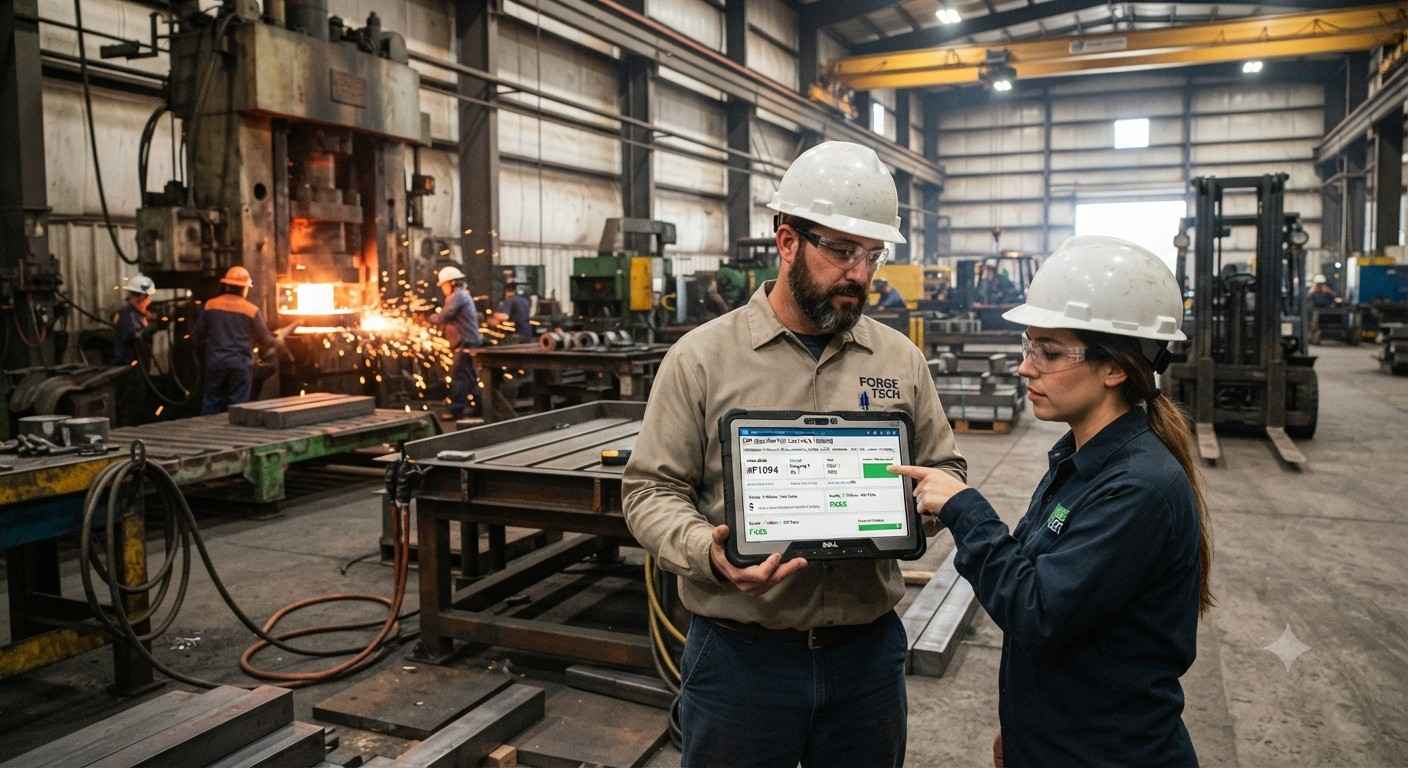
ERP for Casting and Forging Industry: How SAP Helps Manufacturers Improve Production, Quality and Profitability
How ERP for casting industry and ERP for forging industry plants control yield, heat traceability, scrap and costing in one system, and how SAP S/4HANA, SAP Business One and Odoo compare.
Quick answer: What is the best ERP for the casting and forging industry?
It depends on your size and complexity. SAP S/4HANA suits large, multi-plant manufacturers. SAP Business One fits small and mid-sized foundries and forge shops. Odoo works for budget-conscious businesses with simpler processes and in-house IT support. All three can track heat numbers, yield, scrap and job costing, but they differ in depth, cost and scalability.
If you run a foundry or a forge shop, you already know the problem. Your furnace doesn’t wait for your spreadsheet. A single wrong alloy ratio, a missed heat-treatment step or a mismatched die can turn a ₹10 lakh batch into scrap.
This is why more owners now look at ERP for casting industry operations and ERP for forging industry plants as a survival tool, not an IT luxury. Customers ask for heat-wise traceability, metal prices swing every month and energy bills keep climbing. In this guide we cover what makes these industries different, what to look for in the software, how SAP helps, and how SAP S/4HANA, SAP Business One and Odoo compare. For wider solution details, see our ERP solutions overview.
Why Casting and Forging Are Not “Normal” Manufacturing
Most ERP systems are designed around assembly: you buy parts, put them together and ship a product. Casting and forging work differently. You melt, pour, shape, heat, cool, machine and test, and every step changes the material itself. These are the problems we see most often:
1. Yield uncertainty
You pour 1,000 kg of metal but get 720 kg of sellable castings. Where did the rest go: runners, risers, rejections or spillage? Without batch-wise data, nobody can say.
2. Heat and batch traceability
Customers in automotive, railways, oil and gas and defence want to know exactly which heat, furnace and chemistry produced each part. A missing record can mean a rejected lot.
3. Volatile raw material costs
Scrap, pig iron, ferroalloys and energy prices change constantly, which makes job costing a moving target and quoting a gamble.
4. Complex routing
A forged component may go through cutting, heating, forging, trimming, heat treatment, shot blasting and machining, often with outsourced steps in between.
5. Quality documentation
Mill test certificates, spectrometer readings, NDT reports and dimensional inspections all need to be linked to the right batch.
6. Energy and downtime
Furnaces and presses consume huge amounts of power. Unplanned stoppages and idle melting hit profit directly.
Spreadsheets and basic accounting software can’t hold all of this together. That is where dedicated casting ERP software and forging ERP software come in.
What a Good ERP for Metal Manufacturing Must Do
A generic ERP won’t cut it. A strong ERP for metal manufacturing should cover these seven areas:
- 1Process-based production planning. Plan by melt, heat or lot, with co-products and by-products such as returns, scrap and runners, not just discrete assembly.
- 2Full heat-to-dispatch traceability. Trace every part to its heat number, raw material lot, furnace, operator and inspection results. Find root causes in minutes, not days.
- 3Scrap, yield and rejection tracking. See rejection by defect type (porosity, shrinkage, cold shut, cracks, laps) and by shift, machine or pattern. What you can’t measure, you can’t reduce.
- 4Accurate costing. Metal, energy, labour, tooling, die life, outsourcing and overheads should flow into real-time job costing, so you know the true margin on every order.
- 5Tooling and die management. Patterns, moulds, dies and punches have limited lives. Track usage, maintenance and replacement.
- 6Integrated quality management. Inspection plans, lab results, certificates and non-conformance reports should sit inside the ERP, not in separate files.
- 7Maintenance and energy visibility. Preventive maintenance for furnaces, presses and hammers, plus energy per tonne, keeps costs under control.
ERP for Casting Industry: What to Expect
A foundry workflow runs from pattern making and moulding to melting, pouring, shakeout, fettling, heat treatment, machining and dispatch. A well-configured ERP for casting industry operations will let you:
- Plan melts based on order mix and alloy grade
- Record charge mix and chemistry for every heat
- Link spectrometer results to the batch automatically
- Track casting yield (good castings versus metal poured)
- Monitor sand system and mould usage
- Calculate cost per kilogram of good casting
Foundries that move from manual tracking to proper casting ERP software typically find scrap hiding in places they never looked: slow-moving inventory, excess runner weight or repeat defects on a single pattern.
ERP for Forging Industry: What to Expect
Forging has its own demands: billets, heating cycles, die wear, forging temperature, trimming and heat treatment. A strong ERP for forging industry needs to:
- Manage billet and bar stock by size, grade and heat number
- Plan press and hammer capacity
- Track die life and die rework history
- Capture heat treatment parameters and certificates
- Support outsourced processes like machining, plating or testing
- Report on material utilisation and flash loss
Good forging ERP software also handles customer-specific documentation, which matters a great deal for export orders and tier-1 automotive suppliers.
Running a foundry or forge shop?
Get a free, no-pressure process review from an experienced SAP and Odoo partner.
How SAP Helps Manufacturers Improve Production, Quality and Profitability
SAP has decades of experience in process and discrete manufacturing, and many global metal companies run on it. Here is how SAP for foundry industry and forging operations delivers results.
Better production control
Plan by capacity, material availability and delivery dates. Spot bottlenecks, such as a busy furnace or a short-staffed fettling line, before they delay orders.
Stronger quality and traceability
Assign inspection lots to each heat, record results and block substandard material automatically. Trace any defect to the exact furnace, charge and date.
Lower scrap, better yield
Patterns appear once rejections are captured at every stage. Fixing even a 2% yield loss in a metal business can add substantial profit.
Accurate costing and pricing
Material, energy, labour and overheads feed product costing, so you can quote with confidence and spot low-margin “popular” parts.
Smarter inventory and purchasing
Scrap, alloys, consumables, refractories and spares sit in one place, with reorder points and supplier history that cut stockouts.
Integrated finance and compliance
GST, e-invoicing, e-way bills and audit trails are built into SAP’s India localisation, so month-end closing is faster and cleaner.
SAP S/4HANA vs SAP Business One vs Odoo: Which Is Right for You?
This is the question most owners ask. Here is a practical comparison for casting and forging plants.
| Feature | SAP S/4HANA | SAP Business One | Odoo |
|---|---|---|---|
| Best for | Large, multi-plant manufacturers | Small to mid-sized foundries and forge shops | Small businesses with simple processes |
| Process manufacturing depth | Very strong (batch, co-products, quality, planning) | Good for standard needs; extensions possible | Basic to moderate; often needs customisation |
| Heat/batch traceability | Advanced, built-in | Available, may need add-ons | Lot tracking; customisation likely |
| Quality management | Comprehensive | Basic to moderate | Basic; third-party modules help |
| Scalability | Excellent | Good up to mid-size | Good for small; harder at scale |
| Implementation time | 6 to 18 months typical | 2 to 6 months typical | Shortest, depends on scope |
| Cost | Highest | Mid-range | Lowest licence cost |
| Support | Strong global partner network | Strong partner network | Community plus partners; quality varies |
| Reporting and analytics | Real-time, advanced | Good | Decent, depends on setup |
Timelines and costs vary by company size, customisation and partner. Treat them as general guidance, not quotes.
SAP S/4HANA
SAP’s flagship suite for complex planning, multi-plant operations, advanced quality control and real-time analytics. The trade-off is higher cost and a longer implementation.
Best for large plantsSAP Business One
Built for growing businesses that have outgrown Tally or spreadsheets. It covers finance, sales, purchasing, inventory and basic production, often with add-ons for heat tracking and quality.
Best for SMEsOdoo
Modular, flexible and attractively priced. Deep metallurgical needs like heat-wise chemistry, die life and yield analysis often need custom development, which adds cost and risk over time.
Best for simple setupsHow to Choose the Right ERP for Your Foundry or Forge Shop
Skip the sales pitch and ask these five questions:
- 1How many plants and users do we have today, and in five years? Pick a system that will not need replacing when you expand.
- 2How critical is traceability for our customers? If you supply automotive or railways, it is non-negotiable.
- 3What is our real budget? Include implementation, training, add-ons and support. Licence cost is only part of it.
- 4Do we have IT staff? Odoo’s flexibility rewards technical teams, while SAP partners can carry more of the load.
- 5Does the vendor understand metal manufacturing? Ask for references from other foundries or forging units. This matters more than any feature list.
Implementation Roadmap and KPIs That Save Money
Start with a process study that maps how a heat actually moves from charge to dispatch. Clean item masters, BOMs and routings first, train the shop floor and not just the office, and go live in phases: finance, inventory and production first, then quality and maintenance.
| Phase | Typical duration | What happens |
|---|---|---|
| Process study | 2 to 4 weeks | Map melting, forging, heat treatment and dispatch flows |
| Data preparation | 2 to 4 weeks | Clean items, BOMs, routings, vendors and customers |
| Configuration and pilot | 6 to 12 weeks | Set up finance, inventory and production; test on one line |
| Training and go-live | Varies | Train supervisors, quality and accounts teams |
| Quality and maintenance | Next phase | Add inspection, die management and maintenance |
| Review | 30, 60, 90 days | Track KPIs and optimise |
Track a few KPIs from day one: yield percentage, rejection rate, energy per tonne, on-time delivery and cost per kg. Improvement in these numbers is the clearest proof that your investment in casting ERP software or forging ERP software is working.
Frequently Asked Questions
Final Thoughts
Casting and forging will always be tough businesses. Metal prices move, customers demand tighter tolerances and energy bills keep climbing. But the manufacturers who win are the ones who see their numbers clearly: yield, scrap, cost and delivery.
The right ERP for metal manufacturing gives you that clarity. Whether you choose SAP for foundry industry needs through S/4HANA, Business One for a growing unit, or Odoo for a leaner setup, match the system to your real processes, not the other way around. If you are exploring casting ERP software or forging ERP software, document your pain points first and talk to a partner who has implemented ERP in foundries and forges. A good partner will ask about your furnaces before they show you a demo.
Ready to Cut Scrap and Gain Full Heat Traceability?
Talk to 2iSolutions for an honest assessment of the casting ERP software or forging ERP software that fits your plant, your customers and your growth plan.