Future Outlook with ERP for Automotive and Farm Equipment Industry
The farm equipment and automotive industry has entered the transformative decade defined by the accelerated digitalization process, more demanding sustainability policy, more networked supply chains, and the emergence of smart manufacturing. OEMs, Tier-1 suppliers, and farm equipment manufacturers are no longer separated based on the performance of a product or prices only. The new competitive advantage is created by the speed of operations, visibility in real-time, compliance with the regulations, and constant innovation in a changing and dynamic marketplace.
In this context, the ERP for Automotive Industry and Farm Equipment Industry solutions are turning out to be the essential support of long-term development and stability. Contemporary ERP systems integrate manufacturing, supply chain, finance, quality and compliance into one intelligent system enabling organisations to react more swiftly in reaction to market fluctuations and operational shocks. To business associates of 2isolutions, ERP is not a back-end transactional platform, it is a digital backbone that enables scalability and agility pertinent to the future of manufacturing through the use of data as a driver of insights, automation, and cloud-based scalability.
The innovation promoted by the current Automotive Industry Software and platform further increases this evolution. Through the aid of SAP BTP Developments, manufacturers are able to expand their ERP capabilities through analytics, AI, IoT, and integration frameworks which link people, processes and machines all throughout the value chain. Therefore, ERP emerges as a core centre of smart decision-making, business excellence and sustainable development.
This view shows the future prospects of the ERP adoption in the automotive and farm equipment industry and how the next generation ERP systems are redefining manufacturing operations in a more connected and competitive global economy.
The Changing Dynamics of Automotive and Farm Equipment Manufacturing
Both industries share common challenges but also face sector-specific pressures:
- Automotive manufacturers are transitioning to electric vehicles (EVs), autonomous systems, and connected mobility.
- Farm equipment manufacturers are integrating precision agriculture, IoT-enabled machinery, and sustainability-driven production.
These shifts demand enterprise systems that go beyond traditional accounting and inventory. Modern Automotive Industry Software and Farm Equipment ERP Software must handle:
- Complex multi-tier supply chains
- Variant-heavy production and engineering changes
- Regulatory compliance across regions
- Predictive maintenance and asset lifecycle tracking
- Real-time analytics for faster decision-making
Legacy ERP systems struggle to keep pace with this complexity, making next-generation ERP platforms a necessity.
Why ERP Is the Future Backbone for Automotive Industry
ERP for Automotive Industry as a Strategic Enabler
The necessity to be agile, resilient, and make intelligent decisions tends to shape the future of the automotive industry. Arrays of ERP for Automotive Industry act as a single digital backbone, which effectively and perfectly unites important business processes like production planning, quality management, procurement, finance, and regulatory compliance in one centralized system. Automobile ERP systems allow manufacturers to react more promptly to market changes, disruption of the supply chain, and changing customer needs by removing data silos and providing real-time visibility of all operations. Such platforms also facilitate lean manufacturing, improve quality traceability and facilitate quality compliance to global industry standards. With the efforts of automotive firms towards an electric, connected, and autonomous vehicle, ERP is critical in facilitating scalable expansion, automotive efficiency, and future competitiveness in an industry that is evolving at an unprecedented rate.
Key future-facing benefits include:
- End-to-end supply chain visibility to mitigate disruptions
- Just-in-time and just-in-sequence manufacturing support
- Quality traceability to meet OEM and regulatory standards
- Scalability for global expansion and new mobility models
As vehicle architectures become software-defined, ERP systems will increasingly integrate with PLM, MES, and IoT platforms to create a digital thread across the product lifecycle.
ERP for Farm Equipment Industry: Powering Smart Agriculture Manufacturing

The Rise of Farm Equipment ERP Software
The farm machinery sector has developed a lot as compared to the old days of mechanical manufacturing. The new technologies that have been incorporated in modern agricultural machinery include sensors, GPS, telematics and AI-based intelligence to enhance performance and productivity. This change in technology requires a powerful ERP for Farm Equipment Industry capable of coping with the rising complexity in the operations. A contemporary ERP system should freely integrate engineering, production planning, supply chain integration, quality control, and after market service. It is also necessary that it allows the real-time data view, equipment lifecycle, and interconnection with the digital farming ecosystems. Innovation is increasing faster, with ERP systems playing an essential role in ensuring farm equipment manufacturers can achieve scale effectiveness, keep up with compliance, and cost efficiencies and provide smarter and connected machines in line with the future of precision agriculture.
- Engineer-to-order and configure-to-order manufacturing
- Seasonal demand fluctuations
- Dealer and distributor network management
- Warranty, service, and aftermarket operations
Farm Equipment ERP Software helps manufacturers connect production, sales, and service operations, ensuring consistent performance across the value chain.
Industry 4.0 and the ERP-Led Smart Factory
ERP at the Core of Digital Manufacturing
Industry 4.0 initiatives rely heavily on ERP as the system of record and system of insight. Modern ERP platforms enable:
- Real-time production monitoring
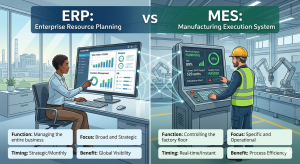
- Integration with shop-floor systems (MES, SCADA)
- Predictive maintenance using machine data
- Automated quality inspections and alerts
For both automotive and farm equipment manufacturers, ERP-driven smart factories mean lower downtime, improved yield, and faster response to change.
The Role of SAP BTP Developments in the Future ERP Landscape
Extending ERP Intelligence with SAP BTP
One of the most significant trends shaping ERP’s future is platform extensibility. SAP BTP Developments allow organizations to enhance their ERP systems with advanced capabilities such as:
- AI and machine learning for demand forecasting
- IoT integration for connected assets
- Advanced analytics and dashboards
- Workflow automation and low-code applications
Using SAP Business Technology Platform allows manufacturers to develop specific innovations to the industry without tampering with the stability of the core ERP.
In the case of companies that are partnering with 2isolutions, SAP BTP serves as an extension of the normal ERP functionality to the new digital applications that will be used in the future.
Cloud ERP and the Shift to Composable Enterprises
Why Cloud-Based ERP Is the Future
The future outlook for ERP in automotive and farm equipment manufacturing is decisively cloud-oriented. Cloud ERP enables:
- Faster implementation and upgrades
- Lower infrastructure and maintenance costs
- Continuous innovation through regular releases
- Seamless integration with external ecosystems
With manufacturers shifting to composable enterprise architectures, ERP is turning into a flexible core with specialized applications, with Automotive Industry Software and SAP BTP extensions.
Data-Driven Decision Making with Advanced ERP Analytics
From Reporting to Predictive Insights
Traditional ERP reporting is no longer sufficient. Future-ready ERP platforms deliver:
- Predictive analytics for demand and capacity planning
- Cost simulations for sourcing and production decisions
- ESG and sustainability reporting
- Real-time KPI monitoring across plants and regions
In the case of the ERP for Automotive Industry, this is improved forecasting of the automotive programs and supplier performance. In the case of the ERP for Farm Equipment Industry, it will guarantee proper planning in accordance to the agricultural cycles and demand in the region.
Sustainability and Compliance: A Key ERP Imperative
ERP Supporting Green Manufacturing
Sustainability is becoming a regulatory and competitive requirement. Modern ERP systems support:
- Carbon footprint tracking
- Waste and energy consumption monitoring
- Compliance with global automotive and agricultural regulations
- Ethical sourcing and supplier compliance
Incorporating sustainability measures into Automotive Industry Software and Farm Equipment ERP Software will allow manufacturers to achieve compliance objectives and enhance efficiency at the same time.
The Future of Aftermarket, Service, and Lifecycle Management
ERP Beyond Manufacturing
The future of the ERP exceeds the conventional factory processes by a long way and is of critical importance throughout the equipment lifecycle. Long product life cycles, multi-tiered service systems as well as high dependency on aftermarket in the automotive and farm equipment sectors require the integrated digital systems. The latest ERP systems can facilitate effective planning of spare parts, warranty, and service delivery and keep full tracing of assets. ERP makes it possible to predictive-maintenance, enhance uptime, and customer satisfaction by linking manufacturing data to service and aftermarket operations. This visibility across the end to end enables manufacturers to optimize the inventory, minimize the cost of service, and generate the new income streams by offering the value-added services. Finally, ERP transforms into a lifecycle management platform, which helps in fortifying the customer relations with the customers in the long run and the profitability even after the sales of the products.
ERP enables:
- Serialized asset tracking
- Warranty and service contract management
- Predictive maintenance using IoT data
- Dealer and service partner integration
This lifecycle-centric approach strengthens customer relationships and creates new revenue streams.
Cybersecurity and Data Governance in ERP Ecosystems
As ERP platforms become more connected, data security is critical. Future ERP systems will focus on:
- Role-based access and identity management
- Secure API integrations
- Compliance with global data protection standards
- Continuous monitoring and threat detection
With SAP BTP Developments, manufacturers can implement enterprise-grade security while enabling innovation.
How 2isolutions Adds Value to ERP Transformation
2isolutions brings deep domain expertise in ERP for Automotive Industry and ERP for Farm Equipment Industry, helping manufacturers align technology with business strategy. By combining:
- Industry-specific Automotive Industry Software
- Scalable Farm Equipment ERP Software
- Intelligent extensions through SAP BTP Developments
2isolutions ensures ERP implementations are not just technically sound but future-proof and growth-oriented.
The Road Ahead: ERP as a Competitive Differentiator
The future outlook with ERP for automotive and farm equipment manufacturers is clear:
- ERP will evolve from transactional systems to intelligent digital platforms
- Integration, analytics, and extensibility will define success
- Cloud, AI, and SAP BTP-driven innovation will accelerate transformation
Organizations that invest early in modern ERP architectures will gain operational resilience, market agility, and long-term competitiveness.
Conclusion
The automotive and farm equipment markets are at a stage of defining the digital maturity in which long-term competitiveness will be dictated by digital maturity. Suddenly turning towards electric mobility, targeted agriculture, sustainability policies, and digitalized ecosystems are compelling manufacturers to re-consider the way they operate, scale and innovate. Within such a setting, ERP for Automotive Industry and the ERP for Farm Equipment Industry are no longer support systems; they are mission platforms.
Even the latest ERP settings that are enhanced by the superior Automotive Industry Software, scalable Farm Equipment ERP Software, and innovation-infused SAP BTP developments can help manufacturers to react more swiftly to the market change and still maintain the control of their operations. These solutions combine production, supply chain, quality, finance and compliance in one intelligent platform enabling organizations to transform reactive operations to predictive and data-driven decision-making.
In the case of manufacturers cooperating with 2isolutions, ERP is the digital core of constructing smart factories, allowing interconnected and strong supply chains and integrating sustainability into the daily routine. Unlike other competitors that may operate a business with limited visibility of its real-time position in plants, suppliers, and distribution channels, businesses can take risk, increase efficiency, and scale without concern in very competitive markets.
In the future, those organizations that consider ERP as a strategic investment in future preparedness will be successful instead of seeing it as a cost or compliance undertaking. Innovation, new business models, and long product lifecycles in the automotive and farm equipment industries will be propelled by ERP systems with greater analytics, automation, and extensibility. Over the coming decade, the leading companies that will stay competitive will be those that undergo transformation through ERP.