
Why ERP Software for Manufacturing Industry Matters

Despite the current technological advancement, swift action, and intense competition, the manufacturing industry is grappling with numerous challenges. In response to these challenges, Enterprise Resource Planning (ERP) software has come out as a critical solution especially in areas of efficiency and effectiveness. Manufacturers across different sectors including the large manufacturing industries or the small business entities are integrating their manufacturing processes with the ERP systems. In one way or another, supply chain management, production plans, inventory control, and other essential functions are enhanced by ERP software.
Understanding ERP Software for Manufacturing Industry
Definition and Overview
ERP stands for Enterprise Resource Planning is an essential technological tool that seek to address the issue of susceptibility of several business processes and functions to being streamlined in an organization through a single system. In general, for the manufacturing industry, ERP serves as an integrated system that allows for the proper implementation of critical business processes, such as manufacturing, purchasing, supply chain, and quality assurance. In a manufacturing setting, the role of ERP software for Manufacturing Industry is to provide an integrated solution in which all aspects of a business function smoothly and optimally.
These systems are designed to cater for a variety of processes within a manufacturing setting and so are useful for businesses, big and small. The key benefit is integrated software that allows for the fulfillment of several purposes at once and eliminates the need for multiple programs to be managed. This integration not only brings improvement on operational aspects but also creates a better way of sharing ideas between these departments.
Key Features of ERP Systems
ERP systems for the manufacturing industry encompass several key features designed to optimize every facet of the business process:
– Comprehensive Integration: Manufacturing ERP systems enable the connection of finance, human resource, production, supply chain, and sale functions. This integration helps in achieving two major objectives, which are data consistency and easy access to information across departments.
– Real-Time Data Access: Perhaps the most valued capability of ERP systems is the possibility to deliver real-time data. Indeed, this functionality enables managers to evaluate the present operations and make decisions on the spot, which leads to more effective decision-making in terms of timing.
– Production Planning and Scheduling: One of the critical components of ERP software is its suitability in planning the production sequence, distribution of loads on different machines and delivery schedules for the products.
– Inventory Management: Inventory control and stock management are critical in slashing wastage and costs, and ERP systems bring efficient solutions in tracking products’ movement and inventory status.
– Quality Control: Quality assurance is a crucial aspect in manufacturing and this is why most ERP systems have specific modules for quality control to avoid compromising on quality.
Customization for Manufacturing Needs
Each manufacturing entails different difficulties and working conditions. Therefore, the potential of an ERP system is as a versatile solution that can be adjusted and adapted to the needs of a manufacturing company. This is achieved by making modification of software modules, workflow, dashboard and reports in line with the various processes, products and market demand of the business.
For example, a small manufacturing company might need to access more specialized modules designed for entities with less complex activities, such as manufacturing and sale, compared to a large-scale manufacturing industry that would need sophisticated modules able to manage highly developed supply chain and logistics. Industry-specific ERPs enable manufacturers to make requisite changes rapidly for responding to market forces, changes in regulations, or adoption of new technologies, making them more competitive continually.
Benefits of ERP Software in the Manufacturing Industry
Streamlining Operations
ERP software plays a critical role in streamlining manufacturing operations, thereby allowing companies to achieve higher levels of efficiency:
– Automated Processes: With ERP integrated applications like the generation of purchase orders or preparation of payrolls, it reduces human interference and staff can be used in more strategic ways.
– Efficient Resource Allocation: Planning of how the resources will be used ensure that the working schedules are carried out without much time being taken or the resources depleted.
– Reduced Lead Times: Integrated departments and insights into production schedules prevent delays between order placement and product delivery, which is possible due to ERP software.
Enhancing Productivity and Efficiency
The primary benefit of implementing ERP software within the manufacturing industry is the significant enhancement of productivity and efficiency:
– Centralized Information Access: Since all the relevant information is stored in the ERP system, it becomes easier for employees to acquire the information they need as they work on their tasks, thereby reducing the time that has been taken up by employees as they communicate with their counterparts in other departments.
– Task Management: ERP systems enable better task management efficiency to enhance employee task tracking and completion within the stipulated time.
– Collaboration Tools: Features like internal communication and messaging, video and voice calls, document sharing and access within ERPs help to signify increased collaboration among workplace teams as well as among multiple business units across worldwide locations.
Improving Data Analytics and Decision-Making
Modern manufacturing relies heavily on data-driven decision-making. ERP software aids in improving data analytics, which in turn facilitates more informed decisions:
– Comprehensive Reporting: One feature of the ERP systems is that it offers the capability to produce various types of report which can present different aspects of the business, with focus on its performance indicators so that improvement can be made.
– Predictive Analytics: Certain of the leading ERP systems contain prescriptive analytics elements in their packages, which provide forecasts that can be useful in predicting market trends, resource requirements and possible constraints.
– Enhanced Business Intelligence: Collecting data from various departments, ERP systems contribute to business intelligence by offering owners and managers a clear vision of operations as well as tools for successful strategizing and risk mitigation.
ERP systems can help deliver accurate and useful business analytics, which are critical in improving business processes and sustaining a competitive advantage in manufacturing companies. By deploying these capabilities, manufacturers are in a better place to improve on their performance, create efficiencies, and eventually thrive in the current competitive environment.
In conclusion, implementing ERP software in the manufacturing industry has significant advantages that revolve around increasing efficiency, productivity, and effectiveness of the information gathering and analyzing processes within organizations. With regards to the development of the production industry as influenced by the technological changes as well as the market challenges, the adoption of such systems can be pointed to as a key strategy that the manufacturing companies can consider in a bid to increase organizational efficiency and effectiveness in the face of a challenging business environment.
ERP for Manufacturing Industry in India
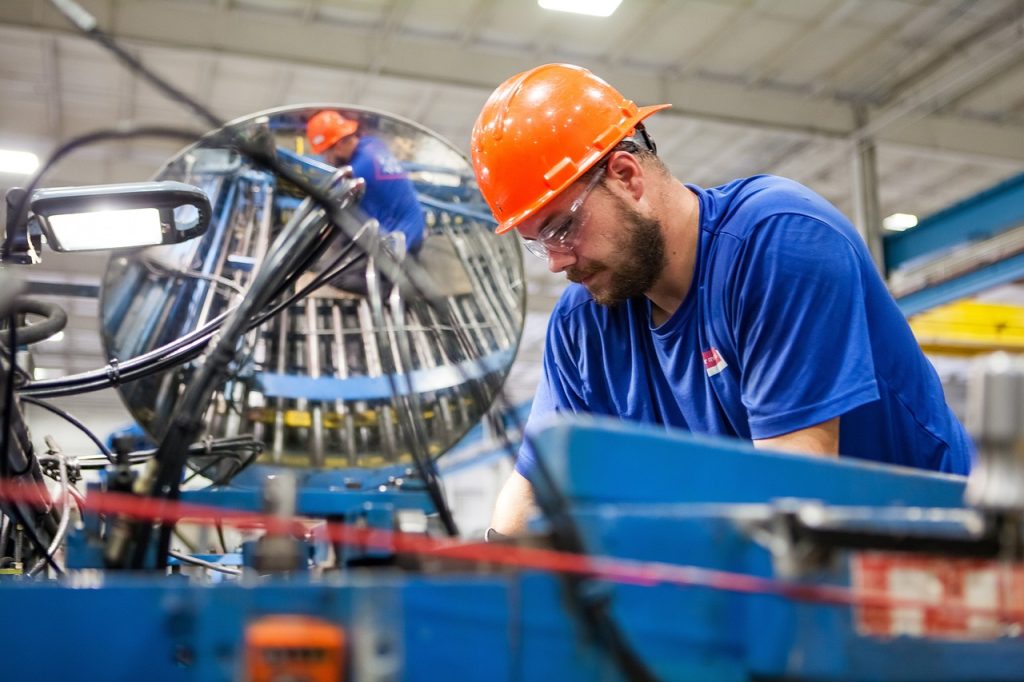
The manufacturing industry in India is moving substantially by embracing the Enterprise Resource Planning (ERP) Software. This is due to the fact that, as companies look for effective ways to do business and create an edge, they have had to resort to the use-by-use systems. Next, let us look at the current levels and trends of adoption and their local barriers, what these barriers are and some of the ERP for Manufacturing Industry in India.
Current Trends and Adoption Rates
In recent years, the trend towards adopting ERP software within the manufacturing sector in India has gained momentum. This surge can be attributed to several driving factors:
- Technological Advancement: With the advancement in technology, the functionality and features of ERP systems has improved and therefore provided the manufacturers with advanced technologies for inventory control, production planning, and even the management of supply chains.
- Demand for Real-time Data: Manufacturers are getting more and more frustrated by the inability to get the information they require when they need it in order to make the right decisions. The advantage of this integration is that businesses are able to forecast production levels, resource allocation and market demand through the use of ERP system analytics.
- Government Initiatives: Policies and schemes have been put in place by the Indian government in support of the digitalization of industries which makes ERP software a suitable option especially to SMEs in the manufacturing sector.
Adoption statistics show that the enterprise resource planning ERP usage trends in manufacturing firms in India has been on the increasing and such a trend has been also witnessed in the small scale enterprises as well as large enterprises where a good proportion of them have adopted soft wares and moved away from conventional operational management processes.
Local Challenges and Solutions
Indian manufacturers face a number of barriers in regard to the adoption of ERP systems in many areas despite the obvious benefits:
- Cost Concerns: Most small organizations avoid the high cost attached to purchasing ERP software. To tackle this, manufacturers may consider externally hosted ERP systems that require a subscription rather than a one-off expense.
- Customization Needs: Operating procedures of Indian manufacturers dictate that they use ERP software that has been ‘tweaked’ for their business. Preference in overcoming this issue includes prevailing over suppliers with modular ERPs and customizability, thus letting the manufacturers build the software to their liking.
- Skill Gaps: The presence and usage of ERP software are not adequate; it is also critical to have a skilled workforce capable of running the system. Filling this skill gap entails providing training to the employees and engaging vendors that provide support and training.
Addressing these challenges allows Indian manufacturers to maximize the value of EPR systems and therefore enhance operational efficiency and productivity.
Success Stories of Indian Manufacturers
Many Indian producers are actually able to integrate ERP solutions, and it demonstrates the power of this technology. Some noteworthy instances are:
- Tata Steel: As a result of ERP implementation, Tata Steel was able to achieve organizational alignment at different levels of the organization. The inclusion of analytics in the system allowed the company to enhance its inventory, reduce losses and improve scheduled production.
- Maruti Suzuki: The ERP software helped the automotive giant to extend its supply chain management capabilities. This enhanced the control of parts and components, ensuring that they are received on time to limit down time to production.
- Bajaj Auto: After adopting an ‘Enterprise Resource Planning’ software, Bajaj Auto recorded an upsurge in production performance. Availability of information aided in working more efficiently on decision making processes, processes that in turn resulted in enhanced profitability.
These case studies support the theory that within the Indian manufacturing industry, ERP software has the potential to transform operations for further success and gushing innovations.
Choosing the Right ERP Software for Manufacturing
Choosing the right ERP software is an important decision for manufacturers aiming to maximize productivity and achieve strategic business goals. The following sections outline the key considerations when choosing an ERP system, emphasizing scalability, flexibility, cost, and return on investment.
Factors to Consider
When considering ERP systems, developers should consider the following factors.
– Industry-specific features: Ensure that ERP software provides modules and tools tailored to specific manufacturing needs, such as production management, product quality, and compliance management.
– Integration capabilities: The chosen ERP system should seamlessly integrate with existing infrastructure, accounting software and core business applications.
– User friendly: The intuitive and easy to navigate system ensures high user adoption, reduces learning curve and increases productivity.
– Vendor reputation: Partnering with a reputable and experienced vendor who provides ongoing support, training, and updates is essential to keeping the ERP system running smoothly.
Scalability and Flexibility
Scalability and flexibility are key considerations when businesses are planning for long-term growth:
– Scalability: ERP software must be able to scale with the business, allowing for additional users, locations, or processes to be added with minimal disruption or additional cost.
– Flexibility: Choose a system that is flexible enough to change jobs and adapt to future technological developments. This flexibility ensures that as manufacturing evolves, the ERP system remains relevant.
By prioritizing scalability and flexibility, manufacturers can ensure that their ERP system remains a valuable asset as their business grows and changes.
Cost and Return on Investment
The economic implications of adopting an ERP system are substantial. It is important to analyze both the cost of the investment and the potential return (ROI):
– Initial investment vs. capital investment ongoing costs: Consider the costs of purchasing and implementing an ERP system and the ongoing costs of maintenance, upgrades, and training.
– Cost-benefit analysis: Conduct a comprehensive cost-benefit analysis to determine how an ERP system will increase productivity, reduce operating costs and improve revenue. This type of research can be critical to improvements such as reduced lead times, better resource utilization, and increased customer satisfaction.
– ROI measurement: Establish clear metrics to measure the ROI of ERP implementation, such as time saved, cost reduction, and increased productivity.
Investing in an ERP system can yield significant long-term returns if manufacturers carefully consider the associated costs and weigh them against the potential benefits
In conclusion, the adoption of ERP software in the manufacturing sector is not a static phenomenon; It’s a strategic imperative that delivers great value. By understanding current trends, addressing local challenges with appropriate solutions, learning from successful implementations, and selecting appropriate systems based on priorities, scalability, flexibility and economy considerations, manufacturers can position themselves to succeed in a competitive global market
The Role of ERP Data Analytics in Manufacturing
Data has emerged as an important asset in the ever-growing industry, enabling operational efficiencies and strategic decisions Integrating enterprise resource planning (ERP) systems and data analytics capabilities The power of ERP Data Analytics in Manufacturing a will be implemented, which facilitates predictive maintenance and forecasting and fostering can fundamentally change production Let’s dive deeper into these aspects.
Understanding Big Data and ERP
Big data refers to the large amounts of data stored by organizations, which are often complex and processed quickly. For manufacturers, this includes data from devices, supply chain management, customer demand and market trends. In this context, ERP systems equipped with data analytics functions can be an important tool for managing and manipulating big data.
– Data integration: ERP systems aggregate disparate data sources in different departments—such as purchasing, manufacturing, and sales—into a unified framework. This facilitates seamless data flow and provides a holistic approach, increasing cross-departmental collaboration.
– Data processing: Modern ERP solutions use advanced efficient algorithms to analyze large amounts of data. This allows them to extract meaningful patterns and insights from large amounts of data, which are then used to inform strategic decision making
Specifically, the integration of big data into an ERP system enables manufacturers to increase operational insights, create more consistent processes and respond more aggressively to market changes
Predictive Maintenance and Forecasting
Predictive maintenance is another approach that emphasizes proactive management of equipment health. By analyzing the data collected from machine sensors and operating circuits, ERP systems can predict potential failures, reducing downtime and optimizing machine utilization
– Scheduled maintenance: ERP analysis enables maintenance schedules based on actual equipment conditions rather than scheduled appointments This reduces unnecessary maintenance activities and extends equipment life.
– Forecasting Demand: By analyzing historical data and market trends, ERP systems help in accurately forecasting demand for products. Manufacturers can proactively adjust inventory and production schedules to meet anticipated demand, reducing waste and avoiding downsizing
Predictive maintenance and forecasting enable manufacturers to optimize planning, reduce costs and increase operational efficiency, giving them a competitive edge in the marketplace
Real-Time Monitoring and Insights
The ability to monitor production processes in real-time is a critical component of modern manufacturing processes. An ERP system with data analytics capabilities gives developers instant access to operational data, allowing them to make faster decisions and respond faster to any issues that arise
– Operational efficiencies: Real-time monitoring of production and equipment status helps identify bottlenecks and inefficiencies in the manufacturing process. This allows manufacturers to quickly deploy solutions and scale their operations.
– Quality control: By continuously analyzing data on manufacturing processes, ERP systems can help ensure that products meet the required quality standards. Warnings can be set for deviations from quality parameters, ensuring immediate corrective action.
Overall, the real-time analysis facilitated by ERP analytics not only increases operational efficiency but also ensures that manufacturers maintain high quality in their products, and end absolutely leads to greater customer satisfaction
Manufacturing Software for Small Business
ERP software is not limited to large manufacturers; & Manufacturing Software for Small Business can also benefit greatly from its use. While smaller businesses may face challenges such as budget constraints, the right ERP For Small Business, especially cloud-based strategies, can provide significant benefits, as evidenced by various successful case studies
Overcoming Budget Constraints
For smaller manufacturing companies, budget constraints are often the main barrier to adopting a complete ERP solution. However, ERP systems can fit within reasonable budget constraints by adopting specific strategies:
– Modular functionality: Smaller businesses can opt for a modular ERP system, which initially allows only the most critical functionality, with the option to integrate additional modules as the business grows and its needs evolve
– Open-source solutions: There are open-source ERP systems that can be a cost-effective alternative. While it may require more technical expertise to set up and maintain, it significantly reduces the upfront cost of software.
– Pay-as-you-go models: Many ERP vendors offer flexible pricing models in which businesses pay only for the use of utilities. This can help small manufacturers manage their cash flow more efficiently.
By effectively navigating budget constraints, small manufacturers can use ERP software to streamline operations and achieve sustainable growth.
Cloud-Based ERP Solutions
Cloud-based ERP solutions offer transformational benefits for small manufacturing companies, as they reduce the need for extensive IT infrastructure and reduce the time required for system implementation
– Scalability: Cloud-based systems provide significant scalability, enabling companies to expand their ERP capabilities to match their growth. This ensures that the system can accommodate increasing amounts of data and more complex workflows as the company expands.
– Accessibility: The cloud provides unparalleled accessibility, allowing team members to access the ERP system from any device with an internet connection. This fosters collaboration and ensures that critical information is always at the fingertips of key stakeholders, regardless of location.
– Cost effectiveness: Cloud ERP solutions typically involve lower upfront costs compared to on-premise systems. They also reduce the need for extensive IT support, since the provider is responsible for system maintenance and upgrades.
The flexibility and accessibility of cloud-based ERP solutions makes them particularly attractive to small manufacturing companies looking to increase their productivity without significant cost savings.
Case Studies of Successful Implementations
Examining case studies of small businesses that have successfully implemented ERP systems can provide valuable insights and inspiration for other companies considering this strategy
1. Brewery: A small craft brewery used a modular ERP system to manage its supply chain and production. By initially focusing on inventory management, the business was able to reduce raw material waste by 30% and improve its productivity by 20% .
2. Custom Tech Fabrications: This small custom metal parts manufacturer adopted a cloud-based ERP solution to streamline operations. After implementation, the company saw a 25% decrease in deployment time and a 15% reduction in operating costs, enabling greater resource allocation to new product development
These case studies highlight that regardless of the size of the business, ERP software can have a significant impact on operational efficiency, cost savings, and potential improvements If we learn from these examples, small businesses can figure out practical ways to adopt successful ERPs tailored to their specific business needs .
In conclusion, whether through data analytics in large manufacturing companies or through the subtle implementation of cloud-based ERP solutions for small businesses, ERP software remains an essential part of business and continuous operational efficiencies across the manufacturing industry this is not limited to manufacturers It can not only currently address operational challenges but also anticipate and adapt to future dems
ERP software remains a key driver in increasing production to operational efficiency. Its ability to streamline systems, integrate disparate systems, and provide real-time data analytics underscores its importance in a competitive environment Art software provides scalable solutions for businesses small growing in their business requirements. Adoption of ERP software not only ensures improved productivity and efficiency but also improves decision-making processes, positioning manufacturers to continue winning in an emerging market.